
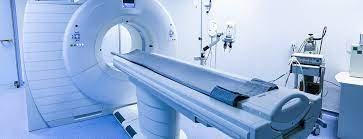
Radiology has completely changed the way modern medicine works. It allows doctors to see inside the body without surgery and helps them make faster and more accurate diagnoses, our Radiology Department brings together advanced technology, highly skilled specialists, and compassionate care to provide the best possible diagnostic services.
Whether it’s a simple X-ray or a complex MRI, we ensure that every test is performed safely and with the patient’s comfort in mind. Our goal is not just to capture images, but to deliver clarity that guides life-saving treatments.
What is Radiology?
Radiology is a medical field that uses different imaging techniques to look at the inside of the body. It plays an essential role in identifying diseases, guiding treatments, and monitoring recovery.
There are two main branches of radiology:
- Diagnostic Radiology – Focused on imaging tests such as X-rays, CT scans, MRIs, and ultrasounds. These tests help doctors confirm or rule out a medical condition.
- Interventional Radiology – Uses imaging guidance for minimally invasive procedures, such as biopsies, draining fluids, or inserting stents. These procedures are less painful, reduce hospital stay, and speed up recovery compared to traditional surgery.
Radiology has become a backbone of healthcare, supporting doctors in almost every medical specialty.
Types of Radiology Services at Echelon Hospital
At Echelon Hospital, we provide a complete range of radiology services under one roof:
- X-Ray – Quick and widely used for detecting fractures, lung infections, or bone problems. Our digital X-ray machines use minimal radiation while delivering clear results.
- Ultrasound – A safe and radiation-free method that uses sound waves to create images. Commonly used during pregnancy and for abdominal, pelvic, and soft tissue scans.
- CT scan (Computed Tomography) – Produces detailed 3D images of organs, bones, and blood vessels. CT scans are very effective in identifying internal injuries, tumors, and blood clots.
- MRI (Magnetic Resonance Imaging) – Uses magnetic fields and radio waves to capture high-quality images of soft tissues, the brain, spine, and joints. It is often used for neurological and musculoskeletal problems.
- Mammography – A specialized test to detect early signs of breast cancer, even before symptoms appear.
- Interventional Radiology – Image-guided procedures such as angioplasty, biopsies, or catheter insertions that avoid the need for open surgery.
- Fluoroscopy – Real-time imaging, often used for studying digestive problems or guiding certain procedures.
Each of these services is performed with patient safety as the highest priority.
Conditions Commonly Diagnosed Through Radiology
Radiology is an essential tool in detecting and monitoring a wide variety of medical conditions. At Echelon Hospital, we use imaging to help diagnose and manage:
- Bone and Joint Injuries – Fractures, dislocations, arthritis, and ligament injuries.
- Neurological Conditions – Stroke, brain tumors, spinal cord injuries, and nerve problems.
- Heart and Lung Diseases – Pneumonia, tuberculosis, heart enlargement, or blocked blood vessels.
- Cancer – Locating tumors, staging cancer, and monitoring treatment progress.
- Pregnancy and Women’s Health – Tracking fetal growth, identifying complications, and performing breast scans.
- Digestive and Abdominal Issues – Gallstones, kidney stones, liver diseases, or intestinal problems.
- Vascular Problems – Blockages, aneurysms, or poor blood circulation.
Beyond diagnosis, radiology is also useful for follow-up care, ensuring that treatments such as surgery or chemotherapy are working as planned.
Your Trusted Partner for Accurate Diagnostic Imaging
Selecting the right hospital for imaging tests is important, as it directly impacts both diagnosis and treatment. At Echelon Hospital, we stand out because of our:
- Expert Radiologists – Our team includes highly experienced radiologists who specialize in interpreting even the most complex scans.
- Advanced Imaging Technology – We use the latest MRI, CT, and ultrasound machines that provide clearer results with faster turnaround times.
- Patient-Centered Approach – From explaining the procedure to ensuring your comfort, we make sure patients feel safe and supported.
- Focus on Safety – Our equipment is designed to minimize radiation exposure while maintaining image quality.
- Quick and Reliable Reports – Most reports are ready within 24 hours, with urgent cases prioritized immediately.
- Collaborative Care – Radiologists work closely with surgeons, oncologists, and physicians to provide complete and accurate treatment plans.
By combining technology with human care, we make radiology a smooth and reassuring experience for every patient.
The Role of Radiology in Modern Healthcare
Radiology is more than just imaging; it is an integral part of patient care. Some key roles include:
- Emergency Diagnosis – In cases of accidents, trauma, or stroke, imaging provides instant insights that guide life-saving decisions.
- Cancer Care – From early detection to monitoring chemotherapy, radiology helps at every stage of cancer treatment.
- Surgical Guidance – Many surgeries rely on imaging to ensure accuracy and precision.
- Preventive Screenings – Regular mammograms, ultrasounds, and CT scans can detect problems before they develop into serious diseases.
By improving speed, accuracy, and patient safety, radiology continues to reshape how healthcare is delivered worldwide.
Frequently Asked Questions (FAQs) on Radiology
Yes. Most tests are completely safe. For procedures involving radiation (like X-rays or CT scans), very low doses are used. At Echelon Hospital, strict safety standards are followed for every test.
It depends on the scan. For example, you may need to fast before an abdominal ultrasound or avoid certain items before an MRI. Our team gives clear instructions before every procedure.
The time varies depending on the scan. An X-ray usually takes 10 minutes, while an MRI or CT scan can take 20–45 minutes. Interventional procedures may take longer.
No, radiology tests are generally painless. You might feel slight discomfort if you are asked to stay still or if a contrast dye is used, but the procedures themselves are not painful.
Most results are available within 24 hours. In emergencies, reports are generated much faster to assist doctors immediately.
Some scans, like ultrasound and MRI, are safe during pregnancy. X-rays and CT scans are generally avoided unless absolutely necessary. Doctors always recommend the safest option for both mother and baby.
Contrast dye is used in some CT and MRI scans to highlight certain areas of the body. It is safe for most patients, though doctors always check for allergies or kidney issues beforehand.